Inside China’s Supply Chains: How a Trusted Sourcing Partner Reduces Cost, Risk, and Lead Time
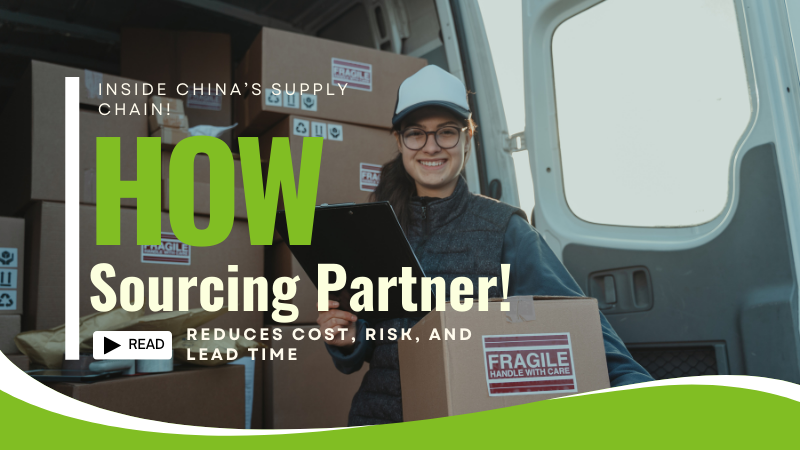
For global brands and retailers, sourcing from China has become both an opportunity and a challenge. On one hand, China offers unmatched manufacturing capacity, competitive pricing, and world-class supply chain efficiency. On the other hand, the ecosystem is complex, layered, and often opaque to buyers who are not familiar with the local industry landscape.
To succeed, it’s no longer about simply finding “a manufacturer.” It’s about understanding the entire supply chain—and managing it strategically.
1. China’s Supply Chain Is Not Just Big — It’s Deeply Layered
When buyers talk about “a factory in China,” what they often overlook is the multi-tier structure behind it:
• OEM/ODM factories
Handle design, assembly, and partial engineering.
• Component suppliers
Provide screens, chips, motors, plastics, batteries, fabrics, metals, packaging, and more.
• Specialized subcontractors
Surface treatment, molding, printing, CNC, polishing, testing, quality labs.
• Packaging & logistics ecosystem
Responsible for labeling, barcodes, carton design, export compliance, shipping, and consolidation.
Each plays a role, and a delay or mistake in any single layer can impact the entire project.
2. The Biggest Risks Buyers Face (And Often Underestimate)
Even seasoned buyers can encounter issues such as:
• Unverified factories
The website looks legit—but the facility behind it may not match the claims.
• Quality inconsistency
Samples are great, but bulk production changes materials or workmanship.
• Communication gaps
Product details lost in translation lead to incorrect versions or spec misunderstandings.
• Uncontrolled lead times
Peak season delays, insufficient production capacity, or mismanaged scheduling.
• Hidden cost inflation
Unexpected mold fees, packaging charges, or shipping adjustments.
Each risk is avoidable with proper local oversight—but difficult to manage remotely.
3. Where a Professional Sourcing Partner Makes a Critical Difference
Working with a reliable sourcing agent is not about “finding cheaper prices.”
It’s about reducing systemic risk and improving supply chain efficiency.
Factory Audit & Supplier Screening
Identify the right tier of factory—not too small (unstable), not too large (targeting big clients only).
Sample Matching & Specification Management
Ensuring that factory samples match your exact requirements before production begins.
Production Tracking
Regular on-site follow-ups, video updates, and timely adjustments prevent delays.
Quality Control & Pre-Shipment Inspection
Detect issues early, ensure compliance with your standards, and avoid costly returns.
Cost Optimization
MOQ negotiations, packaging redesign, material substitution suggestions, and smart shipping plans.
In short: the right sourcing partner helps you control not only the purchase price, but the entire supply chain quality.
4. The True Goal: Long-Term Supply Chain Stability
Success in China sourcing is not about chasing the lowest quote.
It’s about building a stable, transparent, and scalable supply chain system that supports long-term growth.
When a partner manages supplier relationships, communication, pricing transparency, and production monitoring, you get:
Reliable lead times
Consistent product quality
Controlled costs
Reduced operational workload
Faster reaction to market changes
For global businesses, this operational stability is a competitive advantage on its own.
Conclusion
China’s supply chain is a giant ecosystem—fast, interconnected, and highly capable. But its scale and complexity mean that success doesn’t come from choosing a supplier; it comes from managing an entire network of suppliers with clarity, discipline, and the right local insight.
This is where Guangzhou Bright Future brings value: not just finding suppliers, but building supply chain solutions that last.
A trusted sourcing partner does more than bridge language or cultural gaps. It ensures that information flows accurately, production follows the right specifications, and every decision—from materials to packaging to logistics—protects the buyer’s long-term interests.
In a market where miscommunication, hidden risks, and inconsistent quality can cost real money and real time, structured local oversight becomes a strategic advantage, not an optional service. Brands that treat China sourcing as a supply chain partnership—not a one-time transaction—are the ones who build stable, scalable, and profitable operations.