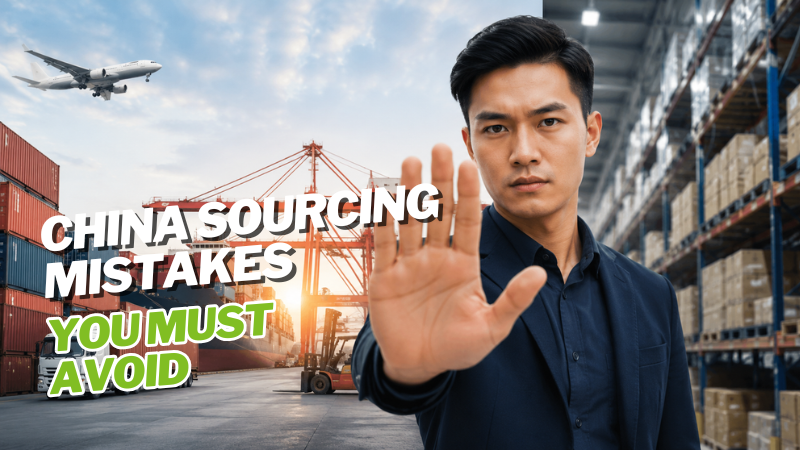
CHINA SOURCING MISTAKES You MUST Avoid (Latest Guide for Importers)
Sourcing from China offers huge opportunities for global importers, but it also comes with risks that many businesses underestimate. A small mistake in supplier selection, communication, or quality control can quickly turn into delayed shipments, unexpected costs, or product failure in the market.
Whether you are working with a sourcing agent, managing procurement internally, or building a long-term supply chain, avoiding these mistakes is essential for stable growth.
Below are the most common sourcing mistakes importers still make today—and how to avoid them.
1. Choosing the Wrong Supplier Based on Price Only
One of the biggest sourcing mistakes is selecting suppliers only because they offer the lowest quote.
Low price often means hidden risks:
- inconsistent product quality
- unstable production capacity
- lack of export experience
- poor after-sales support
A smarter approach is evaluating total value, not just unit price.
Working with an experienced sourcing company in China helps you compare suppliers based on capability, reliability, and long-term performance—not just cost.
2. Not Verifying the Factory
Many importers trust online profiles or marketplace listings without proper verification.
This can lead to:
- trading companies pretending to be factories
- fake certifications
- unreliable production claims
Before placing orders, always confirm:
- business license
- factory ownership
- production equipment
- export history
Professional supplier verification services can significantly reduce these risks.
3. Unclear Product Specifications
Vague requirements are one of the fastest ways to get poor results.
If your specification is unclear, suppliers will interpret it differently.
Always define:
- materials
- dimensions
- packaging
- labeling
- quality standards
- testing requirements
A clear technical sheet helps avoid misunderstandings during production.
4. Skipping Samples Before Mass Production
Never skip sampling.
Product samples allow you to validate:
- material quality
- functionality
- finishing
- color accuracy
- packaging structure
Even experienced importers rely on samples to prevent large-scale production mistakes.
5. No Quality Control System in Place
Relying only on factory QC is not enough.
A proper inspection system should include:
- pre-production inspection
- in-line inspection
- pre-shipment inspection
Without independent checks, defective goods can easily enter your supply chain.
A reliable quality control inspection process ensures consistency before shipment.
6. Ignoring Logistics and Shipping Risks
Many importers focus only on production and forget logistics complexity.
Risks include:
- port congestion
- customs delays
- incorrect documentation
- seasonal freight increases
Proper planning with a supply chain management provider helps avoid unnecessary delays and cost spikes.
7. Misunderstanding Total Landed Cost
Product price is only one part of the equation.
Total cost includes:
- product cost
- shipping
- customs duties
- inspection fees
- warehousing
Without calculating total landed cost, profit margins can be misleading.
An experienced import consulting team can help you calculate real landed cost before ordering.
8. Weak Supplier Relationship Management
Sourcing is not a one-time transaction—it is a long-term partnership.
Strong relationships help you get:
- better pricing
- priority production
- faster response time
- flexible solutions
Good communication often matters more than price negotiation.
Q&A: China Sourcing Questions Importers Ask Most
Q1: Do I need a sourcing agent to import from China?
Not always, but a China sourcing partner helps reduce risk, especially for first-time importers or complex products.
Q2: How do I avoid bad suppliers?
Always verify factories, request samples, and conduct quality inspections before mass production.
Q3: What is the biggest hidden cost in sourcing?
Logistics and customs fees are often underestimated. Always calculate total landed cost, not just product price.
Q4: Can I source directly from factories?
Yes, but you need strong product knowledge and supplier verification ability to avoid trading companies or low-quality factories.
Final Thoughts
Successful sourcing is not about finding the cheapest supplier—it is about building a stable, transparent, and controllable supply chain.
A structured sourcing strategy helps you:
Partner with Guangzhou Bright Future
At Guangzhou Bright Future, we help global buyers source from China with confidence.
We provide:
- product sourcing services
- factory verification
- quality control inspection
- logistics coordination
- supplier management solutions
If you are looking for a reliable sourcing company in China, our team can help you build a safer and more efficient supply chain.
📩 Contact us today to start your sourcing project.