How to Spot Fake China Factory Photos and Certificates: A Buyer's Guide
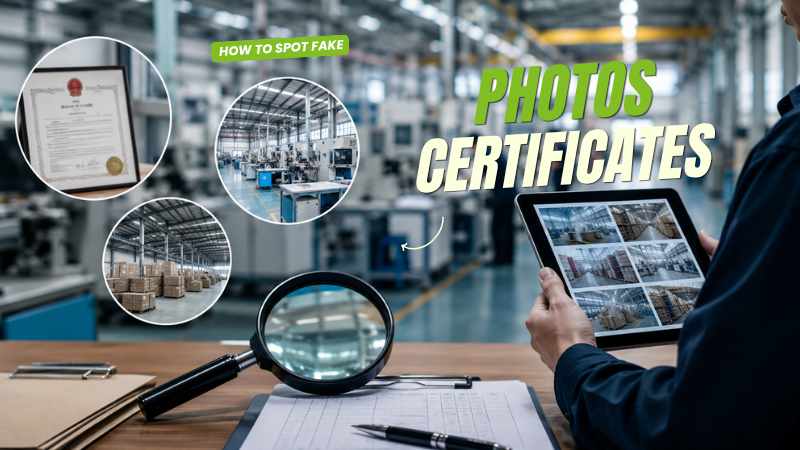
When sourcing products from China, choosing the right supplier is one of the most important decisions you'll make. Unfortunately, not every supplier is as transparent as they appear online. It's becoming increasingly common to see copied factory photos, edited certificates, and misleading company profiles designed to create the impression of a large manufacturing operation.
That doesn't mean every supplier is dishonest. Many legitimate manufacturers and trading companies operate professionally and ethically. The challenge is knowing how to separate reliable partners from those that exaggerate their capabilities.
This guide will show you how to identify common warning signs and explain why working with a professional China sourcing company can significantly reduce your sourcing risks.
Why Fake Factory Information Is a Growing Problem
Creating a professional-looking website has never been easier. Some suppliers use images taken from other factories, purchase stock photos, or display certificates that belong to another company. For overseas buyers who cannot visit China in person, these materials may appear convincing.
Relying solely on photos and documents can lead to:
1. Poor product quality
2. Delayed production
3. Missed shipping deadlines
4. Financial losses
5. Communication problems
6. Difficulty resolving disputes
Spending a little extra time verifying a supplier before placing an order can save significant costs later.
1. Check Whether Factory Photos Appear Elsewhere Online
One of the simplest ways to verify a supplier is to see whether their factory images appear on multiple websites.
If you notice the same production line, warehouse, or employees being used by different companies, that's a strong indication the photos may not belong to the supplier you're evaluating.
Some common red flags include:
1. Identical factory photos used by several companies
2. Different company logos added to the same images
3. Photos that can be found on stock image websites
4. Manufacturing facilities that don't match the products being sold
Authentic manufacturers usually have original photos showing their own production environment.
2. Look for Inconsistent Branding
Carefully examine the details in factory photos.
Ask yourself:
1. Do employee uniforms display another company's logo?
2. Are machine labels inconsistent?
3. Does the warehouse signage match the company name?
4. Are different addresses visible in various photos?
Small inconsistencies often reveal much more than suppliers expect.
3. Verify Business Licenses and Certifications
Professional suppliers should be willing to provide official documentation upon request.
These may include:
1. Business License
2. ISO 9001
3. BSCI
4. SEDEX
5. CE
6. FCC
7. FDA (when applicable)
Receiving a certificate is only the first step.
Always check:
1. Company name
2. Registration number
3. Registered address
4. Expiration date
5. Issuing organization
Many buyers overlook these details, allowing altered or outdated certificates to go unnoticed.
4. Make Sure the Company Information Matches Everywhere
A reliable supplier maintains consistent information across all business channels.
Compare details found on:
1. Company website
2. Product catalog
3. Email signature
4. Business license
5. Certificates
6. Social media pages
If different addresses, phone numbers, or company names appear across multiple sources, ask for clarification before moving forward.
Consistency reflects professionalism.
5. Request a Live Factory Video Tour
A live video call is one of the easiest ways to gain confidence in a supplier.
Rather than watching a polished promotional video, ask the supplier to walk through the factory in real time.
Request to see:
1. Production workshop
2. Assembly lines
3. Quality control department
4. Warehouse
5. Packaging area
6. Finished goods inventory
Most genuine manufacturers are comfortable demonstrating their facilities.
If a supplier repeatedly avoids live video calls or makes excuses, consider it a warning sign.
6. Evaluate Whether Their Production Capacity Makes Sense
Sometimes supplier claims simply don't match reality.
For example, a company may advertise production of hundreds of thousands of units every month while showing only a handful of workers and limited equipment.
Ask practical questions such as:
1. How many production lines do you operate?
2. How many employees work in the factory?
3. What is your monthly output?
4. What are your lead times during peak season?
The answers should be consistent with the factory size shown in photos or videos.
7. Arrange a Professional Factory Audit
For larger orders, nothing replaces an on-site inspection.
A factory audit in China provides independent verification of a supplier's capabilities before production begins.
A typical audit confirms:
1. Factory existence
2. Manufacturing capability
3. Production equipment
4. Workforce size
5. Quality management system
6. Production capacity
7. Compliance with customer requirements
Compared with the cost of a failed shipment, a factory audit is a relatively small investment that can prevent expensive mistakes.
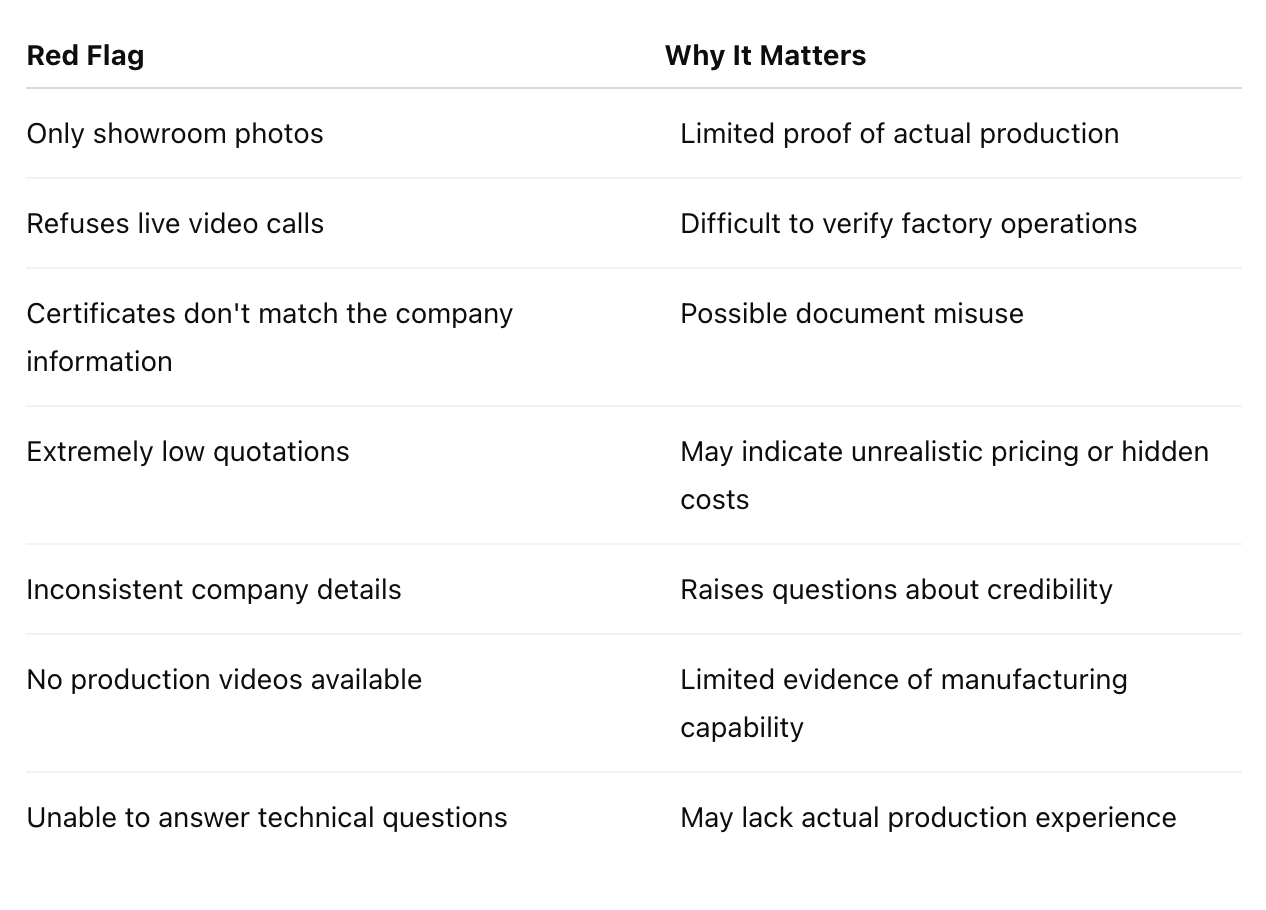
Common Warning Signs
Why Working with a Professional Sourcing Partner Makes Sense
Verifying suppliers takes time, experience, and local knowledge. For overseas buyers, identifying potential risks from thousands of miles away can be challenging.
A professional supplier verification service goes beyond reviewing websites and certificates. Experienced sourcing specialists understand what to look for, know how to communicate with factories, and can verify information through on-site visits and industry networks.
At Guangzhou Bright Future, we help businesses reduce sourcing risks by providing:
1. Supplier verification
2. Factory audits
3. Quality inspections
4. Product sourcing support
5. Production follow-up
6. Export coordination
Instead of relying solely on online photos or marketing materials, you gain independent insight into the suppliers you're considering.
Whether you're placing your first order or managing an established supply chain, having a trusted local partner can help you avoid costly mistakes and make sourcing decisions with greater confidence.
Final Thoughts
Professional websites and attractive factory photos don't always tell the full story. Taking the time to verify a supplier before placing an order can help you avoid delays, quality issues, and unnecessary expenses.
While many suppliers are reliable, independent verification provides an additional layer of protection—especially for high-value or long-term projects.
If you're looking for a dependable partner to help you source products in China, Guangzhou Bright Future offers practical support throughout the entire procurement process. From supplier screening and factory verification to quality inspections and logistics coordination, our team helps businesses source with confidence and build long-term relationships with trustworthy manufacturers.