How Sourcing Companies Simplify Multi-Factory Production: The Hidden System Behind Faster Global Supply Chains
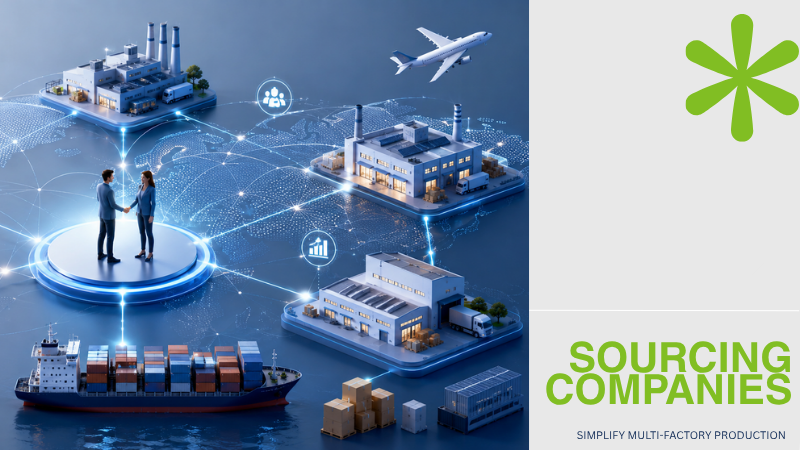
Managing one factory can already feel like a full-time job. Managing three, five, or even ten factories across different product categories? That’s where things become complicated.
Many importers and brand owners start with a single supplier. But as their business grows, they often need different manufacturers for packaging, accessories, custom parts, printing, electronics, textiles, or seasonal items. Suddenly, production is no longer about one order — it becomes a coordination project.
This is where sourcing companies step in, not just as middlemen, but as production coordinators.
At Guangzhou Bright Future, we often see clients asking the same question:
"How do we keep multiple factories moving without losing time, quality, or control?"
The answer lies in system management.
Multi-Factory Production Is Growing Faster Than Ever
Modern products rarely come from a single production line.
A retail brand launching gift sets may need:
1. Factory A for packaging boxes
2. Factory B for product manufacturing
3. Factory C for labels and inserts
4. Factory D for accessories or promotional items
A supermarket equipment project could involve POS hardware, display systems, accessories, and installation components from separate suppliers.
This shift makes multi-factory sourcing more common than traditional single-supplier purchasing.
The challenge?
Every factory has different timelines, communication styles, production speeds, and quality standards.
Without coordination, delays often start quietly:
1. Packaging arrives late
2. Components mismatch
3. Shipping dates move
4. Quality issues appear at final assembly stage
5. Containers leave half empty because goods are not synchronized
The New Role of a China Sourcing Agent: Production Conductor, Not Just Buyer
Many people still imagine a sourcing company simply finding suppliers.
In reality, experienced China sourcing agents often act more like project managers.
Think of it this way:
Factories produce.
Sourcing teams connect.
A sourcing company may help with:
Production Timeline Alignment
If one factory finishes earlier while another falls behind, shipments can become fragmented.
A sourcing team tracks progress across suppliers and adjusts schedules before delays impact delivery.
Cross-Factory Communication
Not every factory communicates in the same way.
One supplier may focus on speed.
Another may prioritize customization.
A sourcing coordinator keeps information flowing between parties so specifications stay aligned.
Material & Component Matching
Small mismatches create big problems.
Examples include:
1. Wrong packaging dimensions
2. Different logo shades
3. Label language errors
4. Accessory compatibility issues
Through supplier coordination services, these issues are often identified earlier.
Why Brands Are Moving Toward Integrated Sourcing Solutions
Global buyers today are looking for flexibility.
Instead of relying on a single manufacturer, many brands build supplier networks.
Benefits include:
Better Risk Distribution
If one factory experiences delays, alternative suppliers may keep production moving.
Product Expansion
Launching additional SKUs becomes easier when multiple suppliers already exist.
Stronger Cost Control
Comparing several manufacturers often creates better pricing visibility.
Faster Market Response
Seasonal launches, promotional bundles, and customized projects become more manageable.
This is why integrated sourcing solutions have become increasingly important for growing brands.
Beyond Purchasing: What Happens Behind the Scenes?
Most of the work in global sourcing management happens before goods ever reach the warehouse.
A sourcing company may coordinate:
✔ Supplier screening
✔ Factory audits
✔ Sample verification
✔ Production follow-ups
✔ Quality inspections
✔ Packaging checks
✔ Shipment consolidation
✔ Export coordination
When several factories are involved, these steps become even more valuable because information gaps are usually where delays begin.
The “Factory Orchestra” Perspective
Here’s a different way to look at it:
Factories are musicians.
Each one plays its own instrument.
But without a conductor, timing falls apart.
Multi-factory production works the same way.
Manufacturers may be excellent individually, yet still struggle when projects require synchronized delivery.
A sourcing company becomes the conductor — helping packaging, production, accessories, quality control, and logistics move toward the same deadline.
That coordination often matters more than the product itself.
How Guangzhou Bright Future Supports Multi-Factory Projects
At Guangzhou Bright Future, we work with clients managing projects across different product categories and supplier networks.
Our team helps simplify multi-factory production management through:
1. China sourcing services
2. Supplier coordination
3. Production follow-up
4. Quality inspection support
5. Shipment consolidation
6. Cross-category sourcing assistance
Whether you are building a new product line, expanding supplier options, or coordinating several manufacturers at once, having a structured sourcing system can reduce complexity significantly.
Final Thoughts
The future of sourcing is no longer about finding one factory.
It is about building connected production ecosystems.
As supply chains become more specialized, multi-factory sourcing, supplier management, and global sourcing solutions will continue to shape how brands scale internationally.
And sometimes, the biggest advantage is not the factory itself.
It is the team keeping everything moving together.
Looking for support with China sourcing, supplier coordination, or multi-factory projects? Guangzhou Bright Future helps brands simplify sourcing workflows and manage production across different suppliers with greater efficiency.