Approved the Sample. Regretted the Order. What Went Wrong?
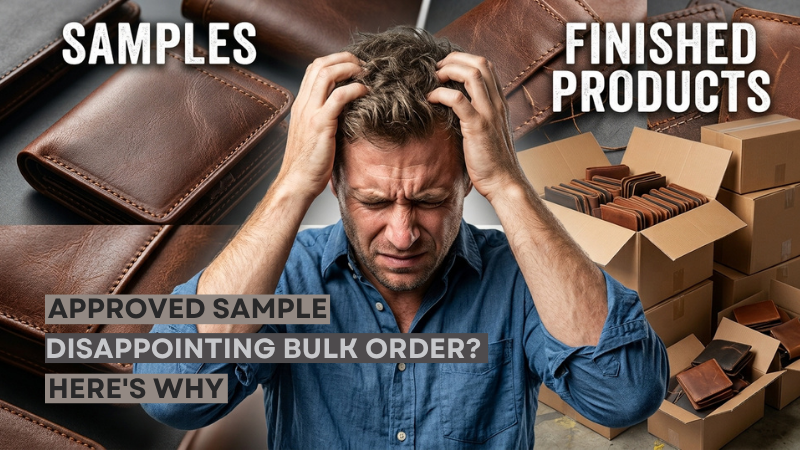
You checked the sample. You approved the quality. You placed the order. Then the bulk production arrived — and something wasn't right.
The color was slightly different. The material felt cheaper. The finishing wasn't as expected. Or worse, hundreds or thousands of units arrived with defects that weren't present in the original sample.
For importers sourcing products from China, this can be a costly and frustrating experience. After all, you approved the sample precisely because it met your expectations.
So, why can a bulk order turn out differently from an approved product sample? More importantly, what can you do to reduce the risk before production begins?
Let's break it down.
1. The Approved Sample Was Never Properly Documented
One of the most overlooked sourcing mistakes is assuming that everyone has the same understanding of what was approved.
A buyer may approve a sample based on its appearance, texture, dimensions, or overall quality. However, if these requirements are not clearly documented, the supplier may not have a precise standard to follow during mass production.
For example, describing a product as having a "premium finish" leaves considerable room for interpretation. Without agreed specifications, different people may have different ideas about what premium quality means.
How to prevent it:
1. Document key product specifications, including dimensions, materials, colors, and finishing requirements.
2. Take clear photos of the approved sample from multiple angles.
3. Record any agreed tolerances or acceptable variations.
4. Keep written confirmation of the final sample approval.
5. Make sure both parties are working from the same version of the specifications.
An approved sample should serve as a clear reference point, not just a product that someone once agreed looked good.
2. Materials or Components Changed During Production
A product's appearance and performance depend on more than its external design. The materials, components, and manufacturing methods used can all affect the final result.
In some cases, the materials used for the sample may differ from those used for mass production. Changes can occur because of material availability, cost considerations, supplier decisions, or misunderstandings about the agreed specifications.
For instance, a packaging sample may look identical to the approved version but use a different board thickness. A plastic product may have a similar appearance while feeling noticeably different because of changes in material composition.
These differences may not be obvious in product photos, but they can affect the product's durability, functionality, or perceived quality.
How to prevent it:
1. Specify the required materials and components in writing.
2. Confirm important material grades, thicknesses, finishes, or other relevant characteristics.
3. Require approval before any material or component substitutions are made.
4. Where appropriate, request supporting documentation for critical materials.
5. Check that production follows the agreed specifications.
If a material change is necessary, it should be communicated and approved before it affects the order.
3. The Supplier Rushed Through Mass Production
Producing one sample and manufacturing thousands of units are two very different tasks. A sample may receive individual attention, careful finishing, and additional adjustments. Mass production, on the other hand, involves repeated processes, production scheduling, machinery, workers, and multiple quality checkpoints.
When production is rushed or quality controls are inadequate, inconsistencies can occur across the batch.
Common examples include uneven finishing, inconsistent dimensions, incorrect assembly, color variation, and defects that become more frequent as production continues.
This does not necessarily mean the supplier is unreliable. However, a satisfactory sample alone does not demonstrate that a supplier can maintain the same standard throughout mass production.
How to prevent it:
1. Confirm that the supplier has the production capacity and processes required for your order.
2. Agree on a realistic production schedule.
3. Establish clear quality requirements before manufacturing begins.
4. Discuss how quality will be monitored during production.
5. Consider in-process inspections for products with complex manufacturing requirements or a higher risk of defects.
The objective is to identify potential problems early, rather than discovering them after the entire order has been completed.
4. Quality Control Focused on Appearance, Not Your Actual Requirements
A product can look correct while still failing to meet the buyer's requirements. For example, a product may have the right color and shape but incorrect dimensions. Packaging may look attractive but lack sufficient protection for transportation. A product may also pass a quick visual check while having functional defects.
The problem often lies in the gap between what the buyer expects and what the supplier actually checks. If quality requirements are vague, inspections may focus on general appearance instead of the specific characteristics that matter to the buyer.
How to prevent it:
Define your quality requirements before production begins. Depending on the product, these may include:
1. Visual quality: Scratches, stains, color consistency, and finishing.
2. Dimensions and specifications: Measurements, weight, materials, and component details.
3. Functionality: Whether the product operates or performs as intended.
4. Packaging: Correct labeling, product protection, and packaging specifications.
5. Quantity and assortment: Whether the order contains the correct quantities, models, colors, or variations.
For larger orders, consider an appropriate pre-shipment inspection to assess whether the finished goods meet the agreed requirements before shipment.
The inspection criteria should be established in advance. Simply asking a supplier to "check the quality" is rarely specific enough.
5. No One Checked Whether the Bulk Order Matched the Approved Sample
Even when the specifications are clear, a gap can remain between the approved sample and the actual production batch.
If the sample is approved at the beginning but never used as a reference during subsequent production checks, deviations may go unnoticed.
This is particularly important when an order involves multiple colors, product variations, components, or packaging options.
For example, the first batch of a product may meet expectations, while a later batch develops color inconsistencies or assembly issues. Without appropriate checks, the problem may only become apparent when the goods reach the buyer.
How to prevent it:
1. Keep an identifiable reference sample or approved sample record.
2. Ensure the supplier understands which sample and specification version have been approved.
3. Compare production units against the approved reference where appropriate.
4. Arrange inspections at suitable stages based on the product and order risks.
5. Document nonconformities and agree on corrective actions before shipment.
Quality control should not be treated as a single final step. It works best when the requirements are clear and checks are planned throughout the relevant stages of production.
Sample Approval vs. Bulk Production: What Should Buyers Check?
Before placing your next order, use this checklist to reduce the risk of unexpected differences.
| What to check | Why it matters |
Approved sample and specifications | Establishes a clear quality reference. |
| Materials and components | Helps prevent unauthorized substitutions. |
| Production capacity and timeline | Supports realistic planning and consistent execution |
Quality standards and inspection criteria | Defines what acceptable quality actually means. |
| Packaging and labeling | Helps ensure the finished goods match the agreed requirements. |
| Inspection arrangements | Helps identify defects before shipment. |
Written change approvals | Reduces misunderstandings when requirements change. |
The exact checks will depend on the product, order quantity, manufacturing process, and potential consequences of a defect. Not every order requires the same inspection approach, but every order benefits from clear expectations.
What If Your Bulk Order Doesn't Match the Approved Sample?
If you discover inconsistencies after production, avoid relying solely on verbal discussions.
Start by documenting the issue.
1. Record the differences. Take photos, measurements, and videos where relevant. Identify the affected products and quantities.
2. Compare against the agreed standard. Use the approved sample, written specifications, and confirmed requirements to establish exactly what differs.
3. Notify the supplier promptly. Explain the discrepancies clearly and provide supporting evidence.
4. Request a corrective action plan. Depending on the circumstances, this may involve rework, replacement, additional inspection, or another mutually agreed solution.
5. Review the cause before the next order. Determine whether the problem came from unclear specifications, material changes, production inconsistencies, or inadequate inspection.
Keep relevant communications and records. If the goods have already shipped or arrived, review the applicable contract terms and shipping arrangements before deciding on the next steps.
The sooner a discrepancy is identified, the more options the buyer may have to address it.
How a Sourcing Agent Can Help Reduce the Risk
Working with a sourcing agent is not a guarantee that every product will be perfect. However, the right support can help reduce communication gaps and improve coordination between buyers and suppliers.
At Guangzhou Bright Future, we support businesses sourcing products from China through services such as supplier coordination, product and order follow-up, quality inspection coordination, and shipment preparation.
Depending on the project requirements, this may include helping buyers clarify specifications, communicate quality expectations, coordinate inspections, and follow up on issues before goods are shipped.
The goal is to make the sourcing process more structured, with fewer assumptions and clearer accountability at each stage.
For buyers managing multiple suppliers or larger orders, having a coordinated process can make it easier to identify potential issues and address them before they become more expensive problems.
Final Thoughts
Approving a sample is an important milestone, but it is not the end of quality management.
The real challenge is ensuring that the approved standard is understood, followed, and maintained throughout mass production.
Clear specifications, documented approvals, consistent communication, and appropriate inspections all play a role in reducing the gap between sample quality and bulk production quality.
Before placing your next order, ask yourself one important question:
Have you only approved the sample, or have you also established how the supplier will reproduce that standard across the entire order?
If you're sourcing products from China and need support coordinating suppliers, quality checks, or shipment preparation, Guangzhou Bright Future can help you build a more structured sourcing process.
Visit gz-brightfuture.com to learn more about our sourcing services.